STX-1, a first-in-class ADC targeting DPP4 protein, acts as an anticancer andsenolytic treatment

Updated: Aug 27
Authors : Benjamin Le Calvé, Delphine Dayde, Grégoire Jouffroy, Omayma Asbai, Virginie Lelarge, Justine Choeur, Thierry Mathieu, Florence Lhospice and Eric Angevin
Starkage Therapeutics, Lille, France, Gustave Roussy, Villejuif, France
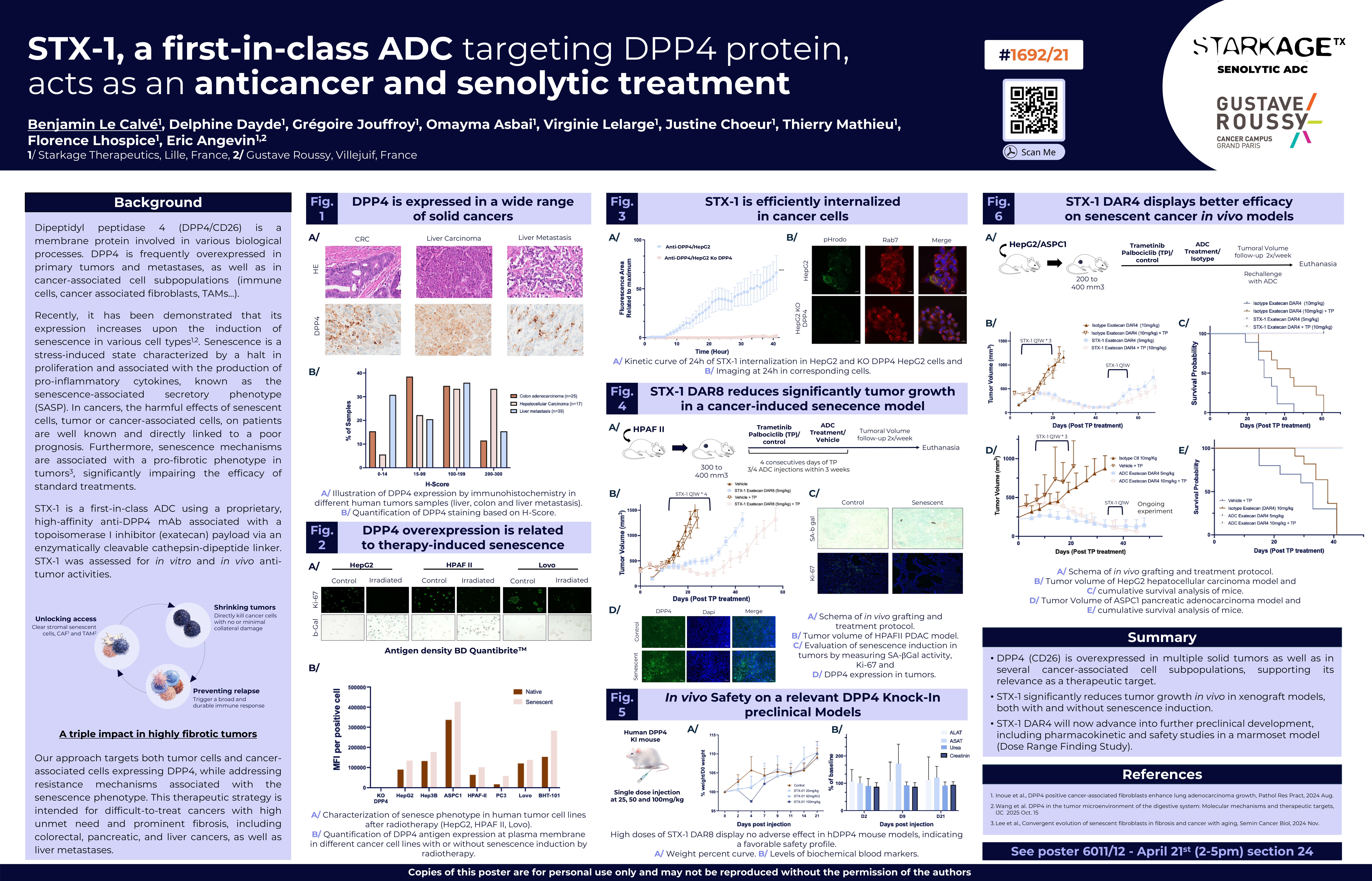
Abstract: Antibody-drug conjugates (ADCs) are innovative cancer therapies which, unlike
conventional chemotherapies, enhance the anti-tumor effect while limiting adverse effects.
However, it is necessary to discover new therapeutic targets that will enable the development
of future generations of ADCs. Here we present an original ADC, called STX-1, targeting DPP4
protein and exhibiting both anticancer and senolytic activities. DPP4 is a type II glycoprotein
that has intrinsic dipeptidyl peptidase IV (DPPIV) activity and is implicated in broad and
various physiological processes, including metabolism of glucose, activation of T lymphocytes, and cell adhesion. This protein has also been known as a cell surface marker associated with varied malignancies and as a part of cancer stem cells in mesothelioma and colon carcinoma. More recently, studies have shown that its expression is a major hallmark of senescence. DPP4 therefore appears to be a promising therapeutic target in the treatment of certain types of cancer, targeting not only tumor but also senescent tumor cells.
STX-1 is composed of a humanized IgG1 antibody directed against DPP4 (anti-DPP4 mAb)
conjugated to four topoisomerase I inhibitor Exatecan with cathepsin B sensitive linker. The
preclinical datasets display in vitro complete characterization of STX-1 associated to high
internalization of the ADC, strong affinity to DPP4 protein and cytotoxic activity on several
cancer models specifically related to target expression. Moreover, senescence induction in
cancer cell lines through chemo- or radiotherapy exposure, boosts DPP4 expression and increases significantly antigen density at the plasma membrane. Despite the cell cycle arrest
induced by senescence, cancer cells remain sensitive to STX-1 treatment. In vivo, administration of intravenous (IV) doses of STX-1 is associated with potent anti-tumor activity
in pancreas and liver cancer xenograft models whose effectiveness depends on the level of
DPP4 expression. However, pretreatment of mice by a combination of Trametinib/Palbociclib
induces senescence in tumor, boost expression of DPP4 and allows a better anti-tumor activity of STX-1. Finally, in toxicology studies in mice expressing human form of DPP4, STX-1 was well tolerated, at dose levels up to 100 mg/kg, 21 days after administration.
To conclude, STX-1 is associated with strong anti-tumor activity in different cancer models, whereas synergistic combination activity to senescence phenotype induction in tumors. The
data presented support future clinical development of STX-1 for the treatment of gastric, pancreatic and liver cancer indications.


